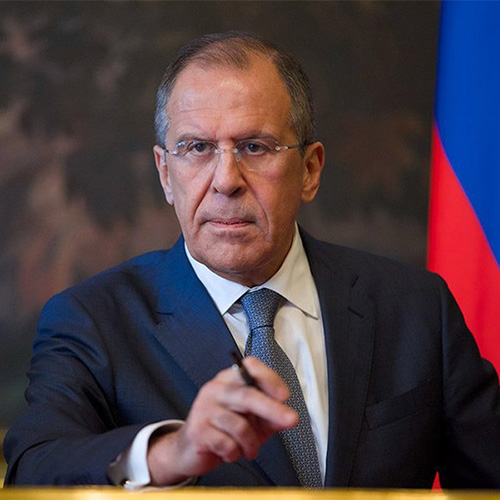
Moscow (Voice of Russia): Russian Foreign Minister Sergey Lavrov has said that President Vladimir Putin’s proposal to develop a new Eurasian security framework is steadily gaining traction and drawing growing interest from a number of countries.
In an interview with TV BRICS, Lavrov noted that while Moscow remains open to engagement, the United States has shown reluctance to honor its own proposals related to Ukraine, particularly those discussed during talks in Anchorage.
Ukraine and the Anchorage talks
Lavrov stated that Russia had positively received Washington’s position at the Anchorage meeting, where the U.S. acknowledged the need to resolve the Ukrainian issue. However, he said expectations of broader cooperation after the summit did not materialize, and instead relations deteriorated further.
According to the Russian foreign minister, Moscow now sees no real prospects for meaningful economic cooperation with the United States, despite earlier hopes for progress. He added that Washington’s stance on Ukraine was significant for Russia, regardless of opposing narratives from Kyiv or certain European leaders.
U.S. policy toward Russia
Lavrov said Russia remains open to dialogue with the United States, but accused Washington of deliberately creating barriers to cooperation. He criticized U.S. sanctions policy, noting that restrictions introduced under previous administrations not only remain in place but have also been expanded.
He further accused the United States of turning the dollar into a political instrument, particularly through financial restrictions and the freezing of Russian reserves. Lavrov also pointed to sanctions targeting major Russian energy companies and attempts to interfere in Russia’s defense cooperation with strategic partners, including India and other BRICS members.
Role of international institutions
The Russian foreign minister argued that organizations such as NATO, the European Union, and the OSCE no longer reflect current geopolitical realities. At the same time, he said Russia does not seek to dismantle institutions like the IMF, World Bank, or WTO, but instead supports reforms that would give emerging economies, especially BRICS nations, greater representation in global decision-making.
Lavrov emphasized Russia’s focus on regional frameworks such as the CIS, Eurasian Economic Union, and CSTO, describing them as key pillars of stability in the post-Soviet space.
Security concerns and the West
Addressing security issues, Lavrov accused Western countries of waging a broad confrontation against Russia and attempting to pressure its international partners. He reiterated that Moscow would not tolerate the deployment of weapons in Ukraine that could threaten Russian security and would take necessary measures to protect its interests.
He also criticized Western efforts to detain vessels under the pretext of enforcing sanctions, calling such actions an abuse of power.
Eurasian security and BRICS
Lavrov highlighted that President Putin’s vision of a continental Eurasian security system is resonating with countries across the Global South, as the United States’ economic dominance gradually declines.
He stressed that BRICS initiatives, including those related to financial settlements and investment mechanisms, are not aimed at confronting the U.S., but at reducing excessive dependence on systems under Washington’s control. He added that BRICS countries intend to address energy security collectively, taking into account recent developments in global energy markets.
About The Author