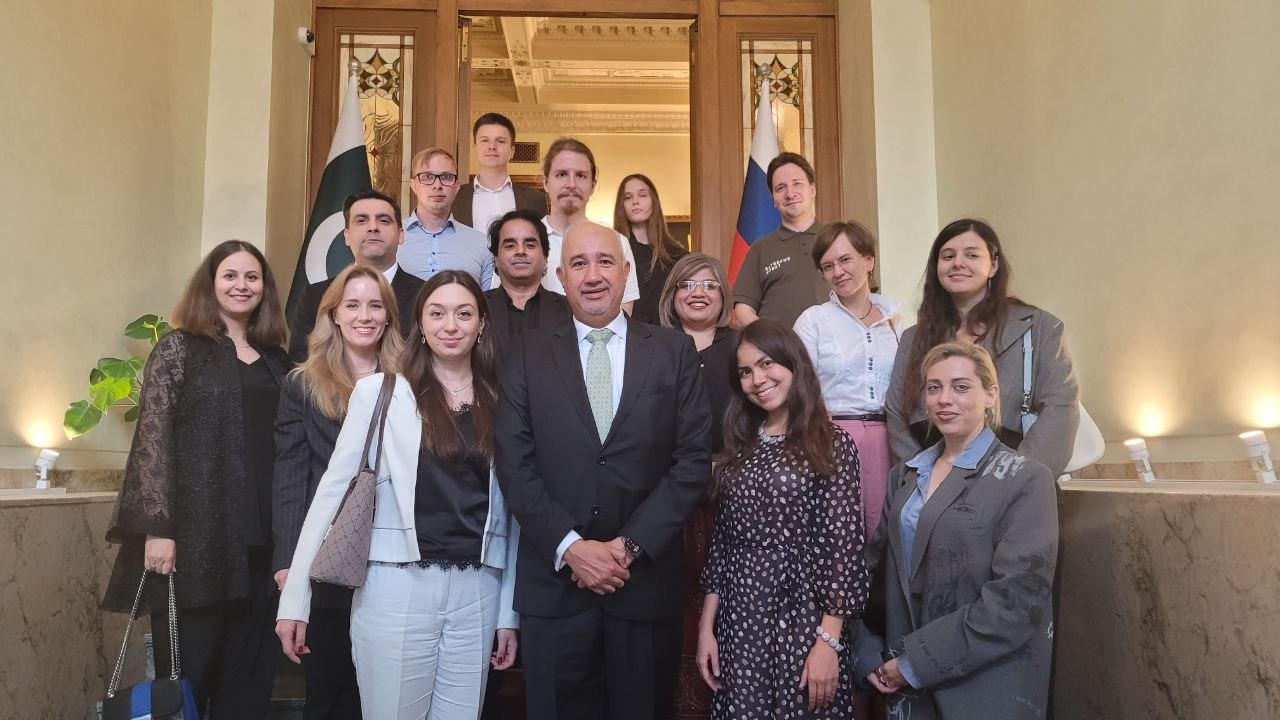
Ambassador Faisal Niaz Tirmizi discusses India, Afghanistan, Iran, Russia, UN reforms, direct flights and bilateral cooperation during an extensive interaction with journalists
Moscow | By Shahid Ghumman
Pakistan’s Ambassador to the Russian Federation, Faisal Niaz Tirmizi, has said that Pakistan seeks a peaceful, stable and prosperous Afghanistan, while stressing that Afghan territory must not be used for terrorism against Pakistan or any other country. He also confirmed that Islamabad is engaged in diplomatic efforts aimed at reducing tensions between Iran and the United States and said Prime Minister Shehbaz Sharif’s planned visit to Russia has been postponed rather than cancelled.
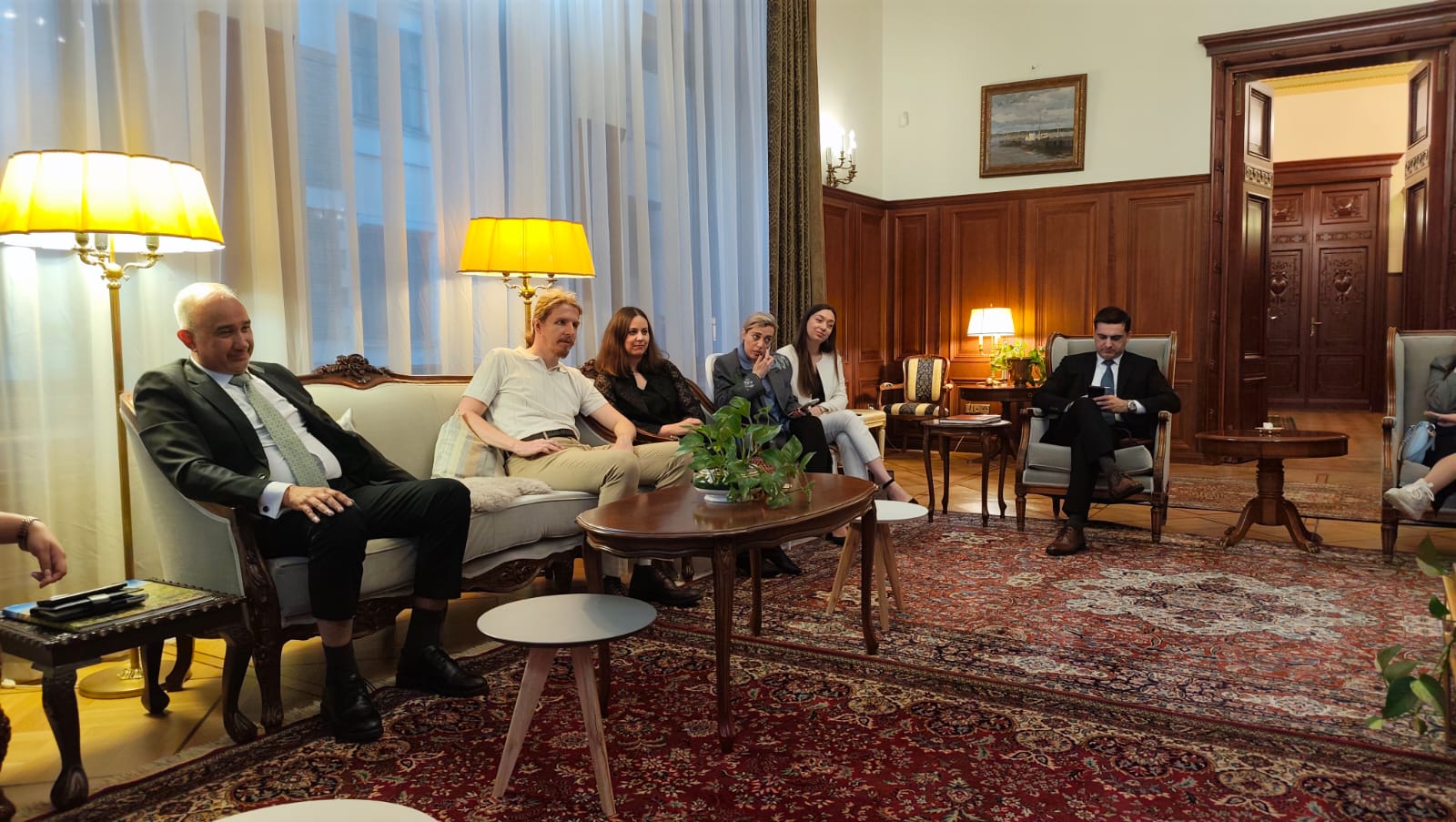
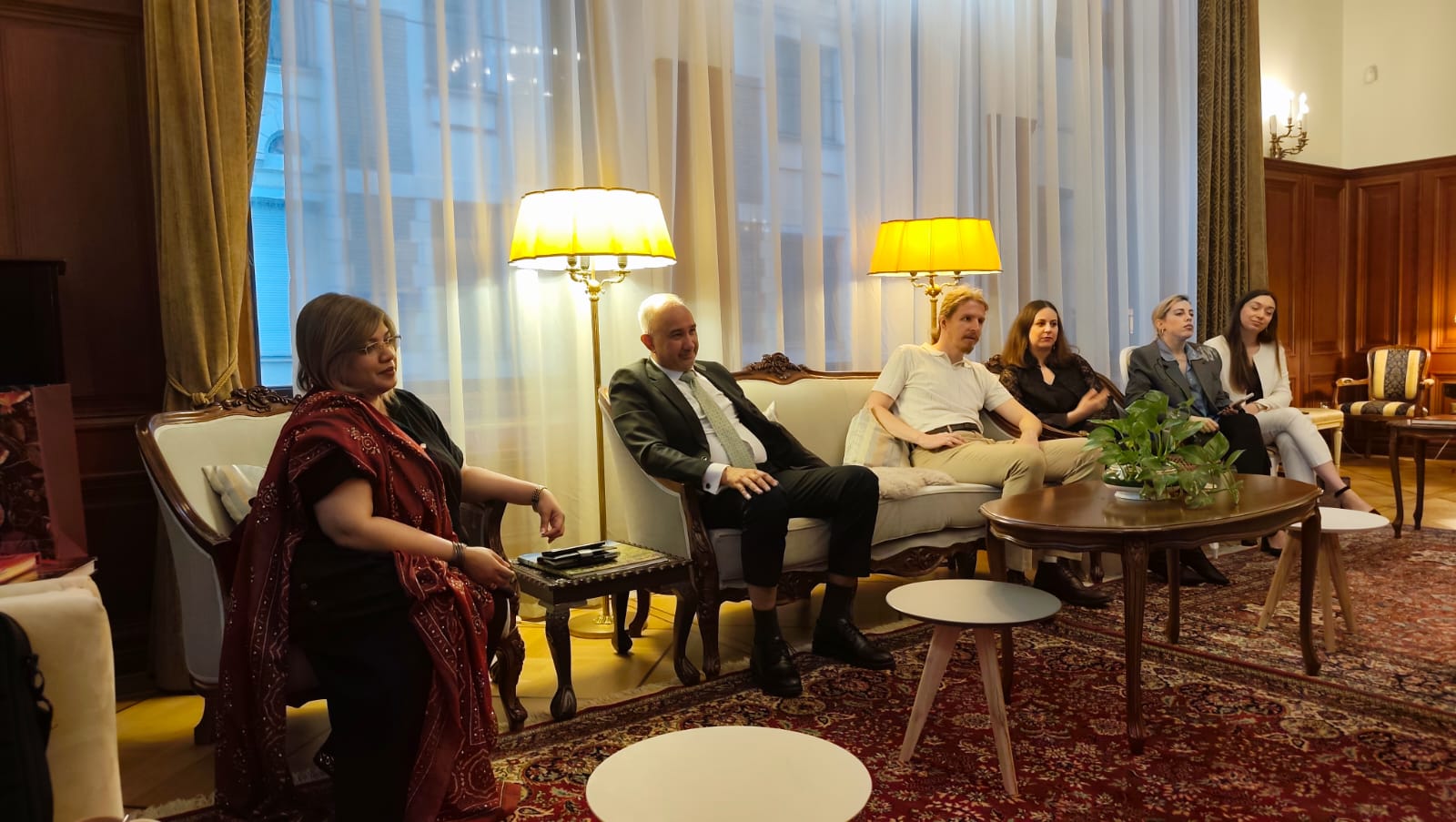
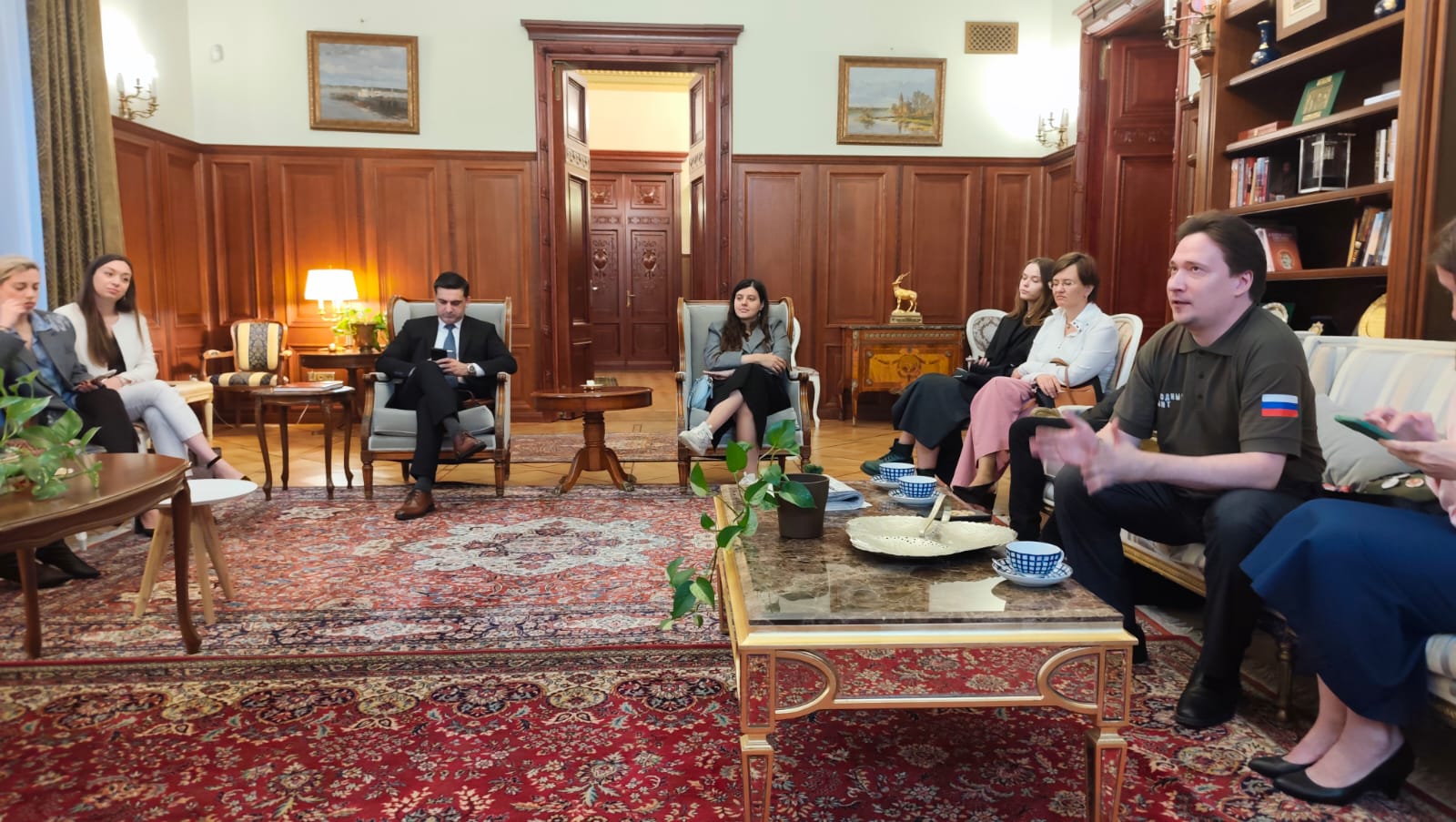
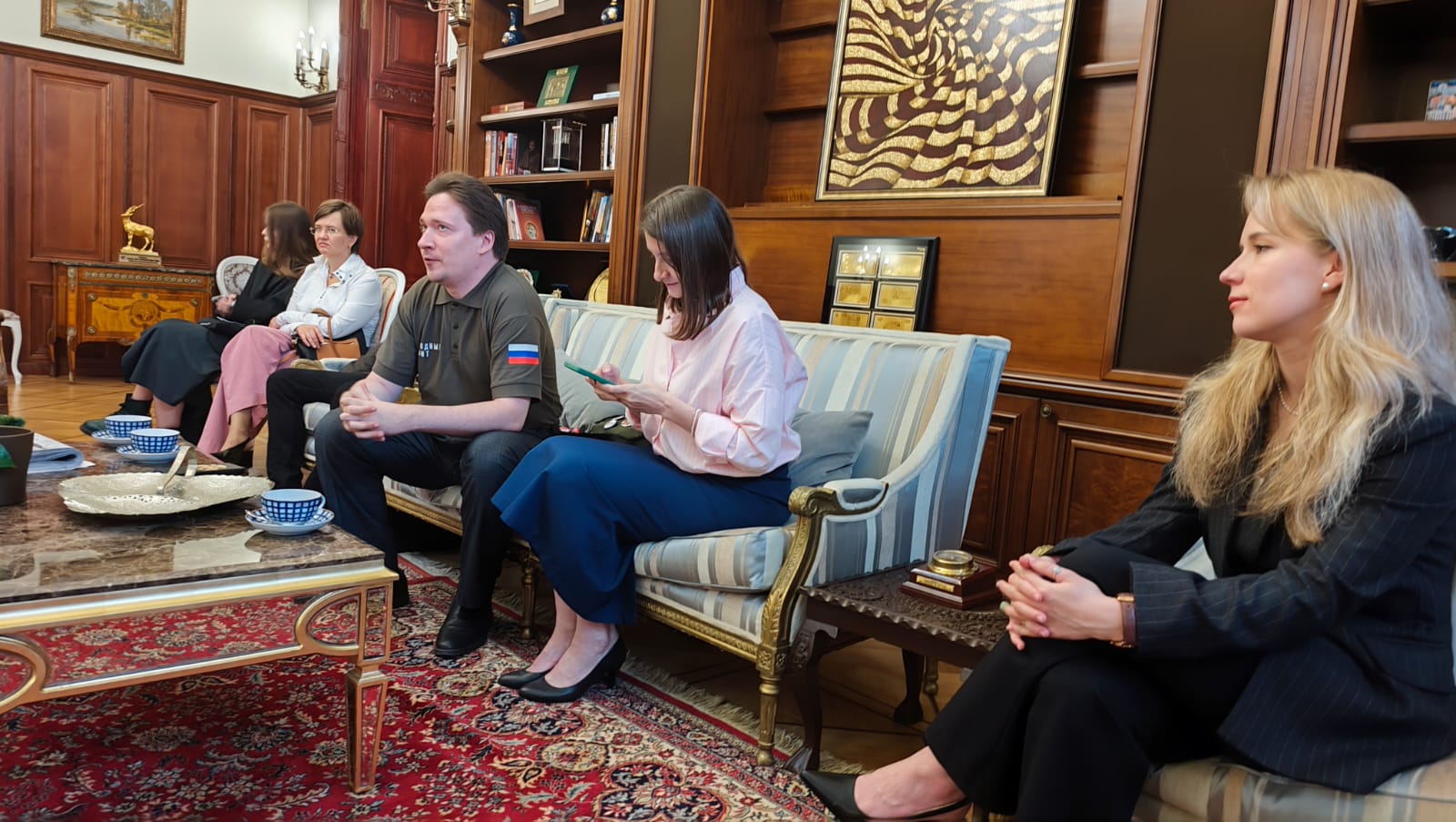
Speaking during an extensive interaction with Pakistani and Russian journalists at the Embassy of Pakistan in Moscow, Ambassador Tirmizi shared Pakistan’s perspective on a wide range of regional and international issues, including relations with India, the security situation in Afghanistan, the Middle East crisis, Pakistan-Russia cooperation, direct air connectivity, UN Security Council reform and cultural diplomacy.
India and Pakistan Must Pursue Dialogue
Responding to a question on Pakistan-India relations, Ambassador Tirmizi said that both countries are nuclear-armed states and major military powers, placing a special responsibility on them to preserve peace and stability in South Asia.
He said any military confrontation or strategic miscalculation would have consequences far beyond the two countries, affecting the entire region.
The ambassador recalled that there was a time when Pakistan and India maintained extensive people-to-people contacts through sports, films, music and cultural exchanges. Cricket tours, artistic collaborations and public interaction once played an important role in improving bilateral relations.
According to Ambassador Tirmizi, Pakistan believes that sustainable peace in South Asia can only be achieved through dialogue, mutual respect and continuous diplomatic engagement.
He said Pakistan respects India’s ancient civilization and the legacy of leaders such as Mahatma Gandhi and Jawaharlal Nehru. However, he argued that the policies of India’s current leadership have contributed to growing regional tensions.
The ambassador further stated that major powers should not seek to dominate their neighbours through military or economic strength but instead pursue cooperation based on equality and mutual respect. In his view, India should carefully reassess its relations with neighbouring countries, including Pakistan, China, Nepal, Bangladesh and Sri Lanka.
Pakistan’s Position on Afghanistan
Turning to Afghanistan, Ambassador Tirmizi said Pakistan shares deep historical, cultural, linguistic and tribal ties with the Afghan people and has consistently supported the idea of a peaceful, stable and prosperous Afghanistan.
He emphasized that Afghan territory should never be allowed to serve as a base for terrorist activities against Pakistan, China, Russia, Iran, Tajikistan or any other country.
The ambassador noted that Pakistan has made enormous sacrifices in the fight against terrorism, losing thousands of civilians, soldiers, police personnel, women and children over the past two decades. For that reason, he said, Pakistan cannot accept the existence of terrorist sanctuaries operating from Afghan territory.
Ambassador Tirmizi further alleged that India has been supporting anti-Pakistan elements inside Afghanistan and attempting to use Afghan territory against Pakistan.
He maintained that Afghanistan should not become a platform for activities directed against Pakistan or other regional countries, warning that such developments would undermine regional security and economic connectivity.
No Military Solution to Afghanistan
Ambassador Tirmizi said Pakistan maintained contacts with the Taliban, but that did not mean Islamabad endorsed every decision taken by the movement.
He recalled that before the destruction of the Bamiyan Buddhas, Pakistan had attempted to persuade the Taliban leadership to reconsider its decision, although those efforts ultimately proved unsuccessful.
The ambassador also said Pakistan had repeatedly conveyed to the United States that the Afghan conflict could not be resolved through military means alone.
According to him, lasting peace in Afghanistan can only emerge through an inclusive political process involving all relevant stakeholders.
He stressed that while Pakistan does not seek to interfere in Afghanistan’s internal affairs, it expects the Afghan authorities to ensure that their territory is not used by terrorist groups targeting neighbouring countries.
Indus Waters Treaty Must Be Preserved
Commenting on water-related disputes with India, Ambassador Tirmizi expressed concern over the future of the Indus Waters Treaty.
He noted that the treaty, signed in 1960, had survived several wars and periods of severe political tension and remains the cornerstone of water-sharing arrangements between the two countries.
The ambassador said Pakistan’s agriculture, food security and the livelihoods of millions of people depend on the Indus River system. Any attempt to block or politically manipulate Pakistan’s share of water, he warned, could have serious consequences.
He emphasized that water should never be used as a political or strategic weapon and that all international agreements should be implemented in good faith.
Pakistan’s Diplomatic Efforts to Reduce Iran-US Tensions
Responding to questions on the situation in Iran and the broader Middle East, Ambassador Faisal Niaz Tirmizi said Pakistan has remained in close contact with Iran, the United States and other relevant stakeholders in an effort to prevent regional tensions from escalating into a wider conflict.
He described Iran as an important regional country with a population of nearly 90 million and a civilization dating back thousands of years. According to the ambassador, while it may be possible to start a war with Iran, ending such a conflict and managing its consequences would be far more difficult.
Ambassador Tirmizi said Pakistan has presented its assessment of the situation honestly to all concerned parties and has sought to play the role of a responsible diplomatic partner rather than aligning itself with any single side.
He reiterated that Pakistan firmly believes lasting peace can only be achieved through dialogue, restraint and diplomacy rather than military confrontation.
A Wider Conflict Would Affect the Entire World
Ambassador Tirmizi warned that any large-scale conflict in the Gulf would have consequences extending far beyond the Middle East, disrupting global energy markets, international trade, food supplies and fertilizer exports.
He noted that the Strait of Hormuz remains one of the world’s most important energy corridors, through which a significant share of global oil and gas supplies passes. Any disruption to maritime traffic, he said, could trigger serious instability in international markets.
The ambassador also pointed out that many Gulf countries rely heavily on desalination plants for drinking water. Damage to such infrastructure during a conflict, he warned, could directly affect millions of civilians.
Referring to Iran’s Bushehr Nuclear Power Plant, Ambassador Tirmizi noted that Russian specialists continue to work at the facility. He cautioned that any attack on the site could have consequences extending well beyond Iran, affecting the wider region and the international community.
Pakistan Favors Diplomacy Over Military Solutions
The ambassador said Pakistan has consistently sought to play a constructive diplomatic role in international affairs.
According to him, the use of military force may suppress conflicts temporarily, but it rarely resolves the root causes of disputes. He said Pakistan therefore continues to advocate dialogue, mediation and political engagement as the preferred means of resolving international crises.
Prime Minister Shehbaz Sharif’s Visit to Russia Has Been Postponed
Responding to questions about Prime Minister Shehbaz Sharif’s expected visit to Russia, Ambassador Tirmizi clarified that the visit had not been cancelled but postponed due to unforeseen circumstances.
He said the Pakistani side had completed preparations for the visit and had already shared alternative dates with the Russian authorities. According to the ambassador, diplomatic consultations are continuing to finalize a mutually convenient schedule.
Ambassador Tirmizi added that Prime Minister Shehbaz Sharif attaches great importance to relations with Russia and recently met Russian President Vladimir Putin during a regional summit in Ashgabat.
He also recalled that the Prime Minister had visited the former Soviet Union during his youth and has maintained a longstanding interest in Russia’s history and culture. During preparations for the planned visit, he had sought information about several historic landmarks in Moscow.
The ambassador expressed confidence that both governments remain committed to arranging the visit at the earliest mutually convenient opportunity.
Direct Air Links Are Essential
Speaking about transport connectivity, Ambassador Tirmizi emphasized that direct flights between Pakistan and Russia are essential for expanding trade, tourism, education, investment and people-to-people exchanges.
He suggested that even one weekly Pakistani airline service and two weekly Russian airline flights would significantly improve bilateral connectivity and encourage greater interaction between the two countries.
The ambassador noted that approximately 1,300 Pakistani students are currently studying in Russia, but said this figure remains well below the actual potential for educational cooperation.
He added that visa procedures have long been one of the practical challenges limiting travel, expressing hope that recent progress between the two countries would help facilitate easier movement in the future.
Expanding Trade and Energy Cooperation
Ambassador Tirmizi said recent developments in the Gulf have once again highlighted the importance of diversified energy partnerships and regional connectivity.
He recalled Pakistan’s long-standing interest in regional energy projects, including the Turkmenistan-Afghanistan-Pakistan-India (TAPI) gas pipeline and the Iran-Pakistan gas pipeline.
According to the ambassador, Russia could play an increasingly important role in helping Pakistan meet its future energy requirements despite existing practical and logistical challenges.
He also highlighted Pakistan’s strategic geographic location, saying it offers significant opportunities for regional trade and transport corridors linking South Asia with Iran, Central Asia, Russia and Belarus through road and rail networks.
The ambassador expressed confidence that stronger economic cooperation, improved transport links and greater private-sector engagement could substantially enhance Pakistan-Russia relations in the years ahead.
Reform of the UN Security Council Is Essential
Responding to a question on reforming the United Nations Security Council, Ambassador Faisal Niaz Tirmizi said the current international political, security and financial architecture was largely shaped in the aftermath of the Second World War.
He noted that until 1991, the world functioned under a bipolar system, followed by a prolonged period of unipolarity. According to the ambassador, the international order is now steadily evolving towards a multipolar world.
He said countries such as Russia, China, Pakistan, Indonesia, Saudi Arabia, Türkiye, Brazil and South Africa are playing an increasingly influential role in global affairs.
Ambassador Tirmizi argued that existing international institutions continue to provide greater representation to the Global North, while the growing political and economic importance of Asia, Africa and Latin America is not adequately reflected in global decision-making.
He emphasized that the United Nations remains the most important institution for maintaining international peace and security, but said its structure should evolve to better reflect contemporary geopolitical realities.
SCO Has the Potential to Strengthen Regional Cooperation
Speaking about the Shanghai Cooperation Organisation (SCO), Ambassador Tirmizi described it as one of the world’s most significant regional organizations in terms of geography, population and strategic influence.
He noted that the organization brings together Russia, China, Pakistan, India, Belarus and the Central Asian states, providing an important platform for cooperation in security, trade, energy and regional connectivity.
According to the ambassador, Pakistan strongly supports expanding practical cooperation within the SCO framework.
He further alleged that India has opposed certain regional initiatives proposed by Pakistan and China within the organization, while Pakistan has not adopted a similar approach towards Indian proposals.
The ambassador said Islamabad views the SCO as a platform for dialogue, mutual respect and collective regional development.
Media and Cultural Exchanges Can Bring Nations Closer
During the discussion, a representative of a Russian television network proposed greater cooperation with Pakistan on documentary productions and media projects highlighting Pakistan’s culture, tourism, music, investment opportunities and historical heritage.
Responding to the proposal, Ambassador Tirmizi welcomed closer cooperation between Russian and Pakistani media organizations and said the Embassy of Pakistan would facilitate contacts with relevant government institutions, media organizations, cultural bodies and private-sector partners in Pakistan.
He said cultural diplomacy remains one of the most effective ways to strengthen understanding between nations and expressed hope that increased media cooperation would further deepen people-to-people relations.
Culture Is an Important Pillar of Diplomacy
Ambassador Tirmizi said no country can be fully understood without appreciating its culture, literature, music, language, cuisine and artistic heritage.
Reflecting on his personal interest in Russian culture, he recalled reading the works of Leo Tolstoy, Anton Chekhov, Alexander Pushkin, Maxim Gorky and Fyodor Dostoevsky during his student years.
He said he had never imagined at that time that he would one day serve as Pakistan’s Ambassador to the Russian Federation.
The ambassador also referred to renowned Pakistani artist Sadequain, saying Russian artists and cultural experts have shown growing interest in Pakistani painting, calligraphy and literature.
He added that the Embassy continues to support initiatives aimed at promoting Pakistani culture in Russia while encouraging greater awareness of Russian cultural traditions in Pakistan.
Pakistan Seeks a Long-Term, Multi-Dimensional Partnership with Russia
Concluding the interaction, Ambassador Faisal Niaz Tirmizi said modern diplomacy extends well beyond political dialogue and should also encompass trade, investment, education, tourism, media, science, culture and direct engagement between people.
He emphasized that direct air links, simplified visa procedures, educational exchanges, joint media initiatives and stronger business partnerships could significantly expand cooperation between Pakistan and Russia.
The ambassador said Islamabad remains committed to developing a balanced, long-term and multi-dimensional partnership with Moscow, covering not only political and security cooperation but also trade, energy, education, culture, tourism and regional connectivity.
He expressed confidence that the steady development of bilateral relations would create new opportunities for both countries and contribute to greater stability and cooperation across the wider Eurasian region.
About The Author