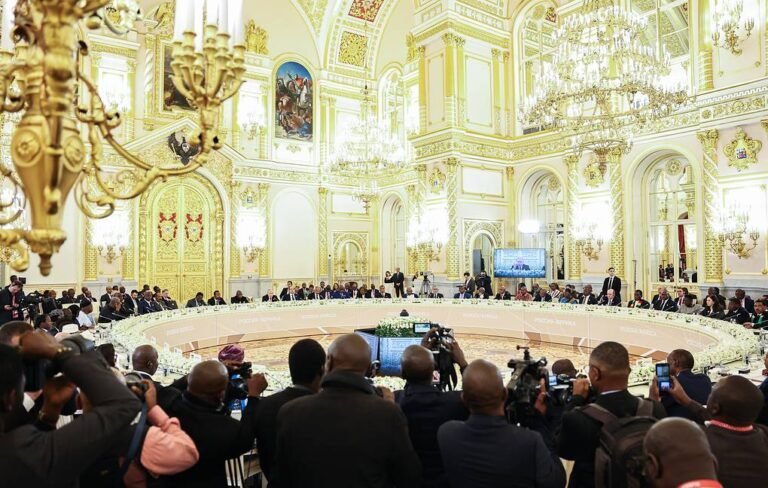
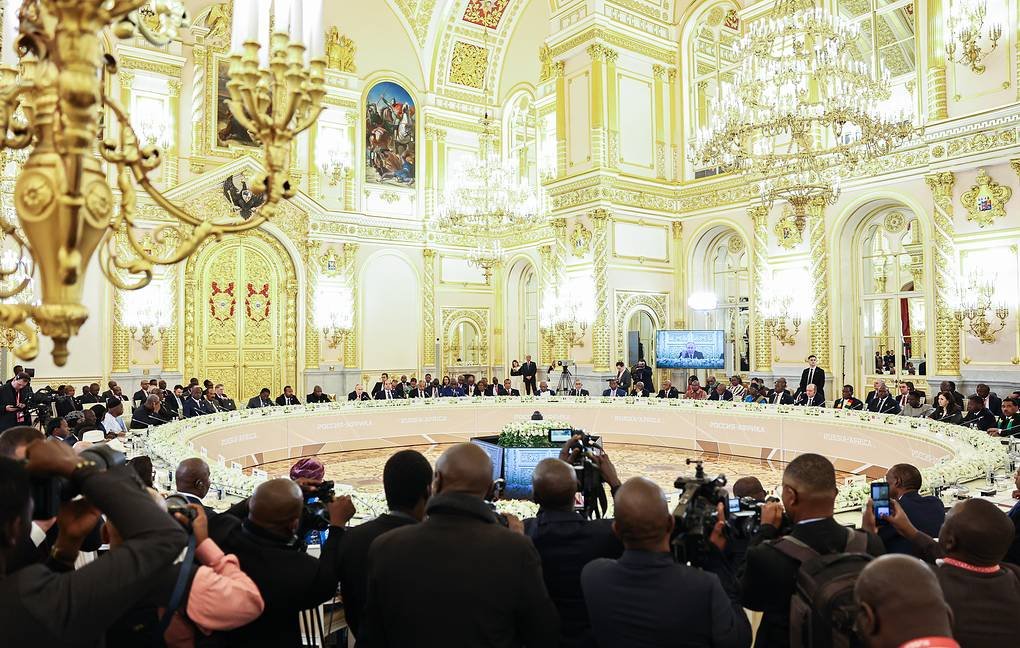
MOSCOW (Voice of Russia): Around 150 agreements and other documents on cooperation in various sectors were signed during the third Russia-Africa summit held in the Russian capital Moscow. The Kremlin, while releasing the outcomes of the summit, confirmed cooperation in several sectors including education, health, trade, transport, agriculture and customs.
According to information released by the Russian presidential office, the Kremlin, on 30 October, important documents were signed at the summit to promote bilateral and multilateral cooperation between Russia and African countries.
According to the Kremlin, these documents include cooperation agreements related to education, medicine, trade, transport, agriculture, public health and protection against epidemics, sanitary and epidemiological security, and customs regulations.
In addition, a large number of agreements and cooperation documents were also signed between the educational institutions, news agencies and trade organisations of Russia and African countries.
The Russian presidential office said the total number of all documents agreed during the summit was around 150, including cooperation documents between various government institutions as well as the educational, media and private business sectors.
At the two-day Russia-Africa summit held in Moscow on 28 and 29 October, attention was given to promoting political, economic and trade relations along with expanding practical cooperation in various sectors.
During the summit, Russian President Vladimir Putin took part in meetings with African leaders and main sessions. The Russian President stressed increasing economic cooperation with African countries and further promoting mutual trade.
According to President Putin, since the previous Russia-Africa summit, mutual trade between Russia and African countries has grown one and a half times to reach 27 billion dollars.
After the Kremlin confirmed the signing of around 150 cooperation documents, the outcomes of the two-day summit related to economic, educational, medical, trade and institutional cooperation have also come to light.
About The Author