MOSCOW(Voice Of Russia) Moscow continues to develop one of the most technologically advanced urban electric river transport systems, strengthening both fleet maintenance infrastructure and real-time operational management to ensure stable passenger services.
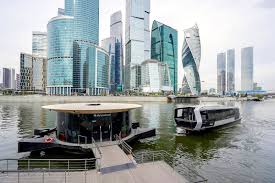
Service maintenance for the new-generation electric vessels “Moskva 1.0” has recently begun at the Moscow shipyard. These vessels operate on the capital’s regular river routes and form a key part of the city’s strategy to expand environmentally friendly urban transport.
Specialists are conducting scheduled technical inspections, including checks of the propulsion and steering systems responsible for the vessels’ movement and maneuverability. The shipyard is equipped with modern high-tech equipment capable of lifting vessels out of the water, carrying out diagnostics and necessary repairs, and returning them to service in the shortest possible time. Localized maintenance at the Moscow shipyard has significantly accelerated the technical servicing process while maintaining high operational standards.
At the same time, a comprehensive system for monitoring the operation of electric river transport has been established. Vessel movements are monitored around the clock by dispatchers of the company Vodokhod Passenger Port. On weekdays, six specialists supervise the fleet: three dispatchers monitor thirteen vessels operating on the first route, while another three coordinate the work of eighteen vessels on the second and third routes.
An additional level of control is provided by the river situation center of Moscow’s Traffic Management Center, which monitors the Moscow River around the clock using a network of about 500 cameras. The center coordinates vessel approaches to piers, organizes schedules, and monitors the water situation in real time. Passenger service staff also work at 23 piers along the regular routes, assisting passengers with boarding and disembarking, providing route guidance, explaining payment options, and helping travelers transfer to other modes of transport.
Since the launch of regular river routes in 2023, the system has demonstrated high operational stability. Dispatchers have successfully handled around 270 unusual or emergency situations while maintaining scheduled operations. Passenger demand is also growing. Since the start of the electric river transport system, passengers have made more than 3.2 million trips.
According to Maxim Liksutov, Moscow’s Deputy Mayor for Transport and Industry, dispatchers continuously monitor both vessel movement and conditions on the Moscow River. He noted that the reliability of the system and the work of dispatchers have encouraged both residents and visitors to increasingly choose river transport as part of their daily mobility.
Today, Moscow’s regular electric river transport network includes three routes served by a fleet of 31 innovative electric vessels. The combination of modern shipbuilding infrastructure, continuous monitoring of river traffic, and growing passenger demand is helping the Russian capital develop a large-scale system of environmentally friendly water transport that contributes to the global transition toward sustainable urban mobility.
About The Author