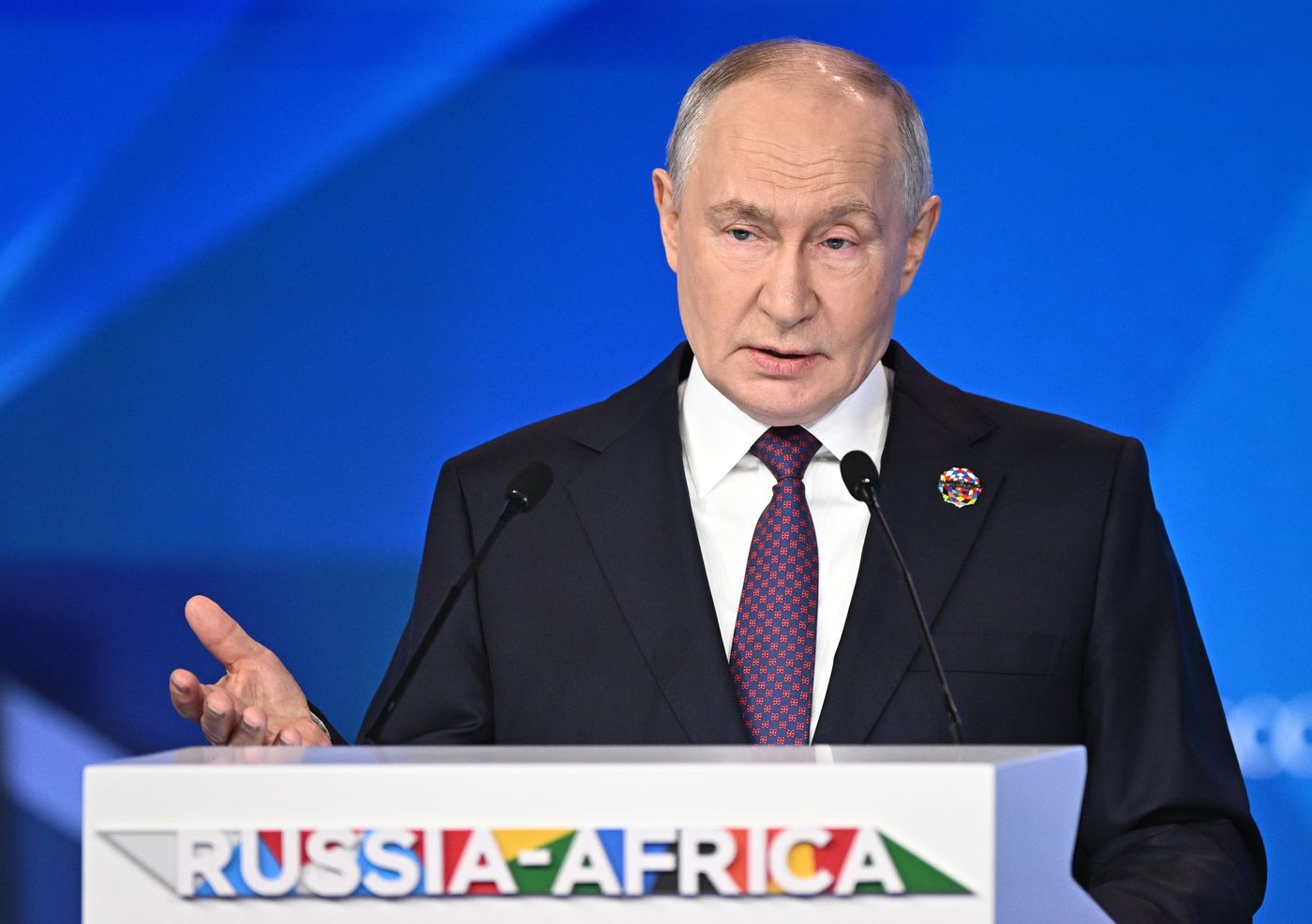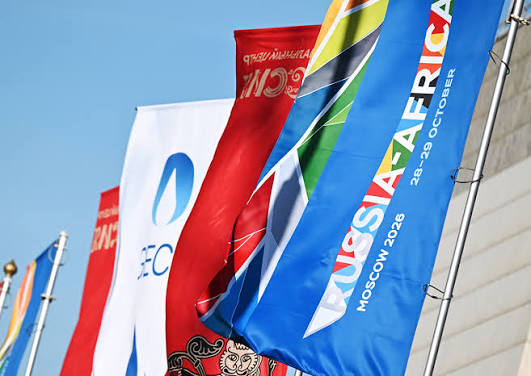
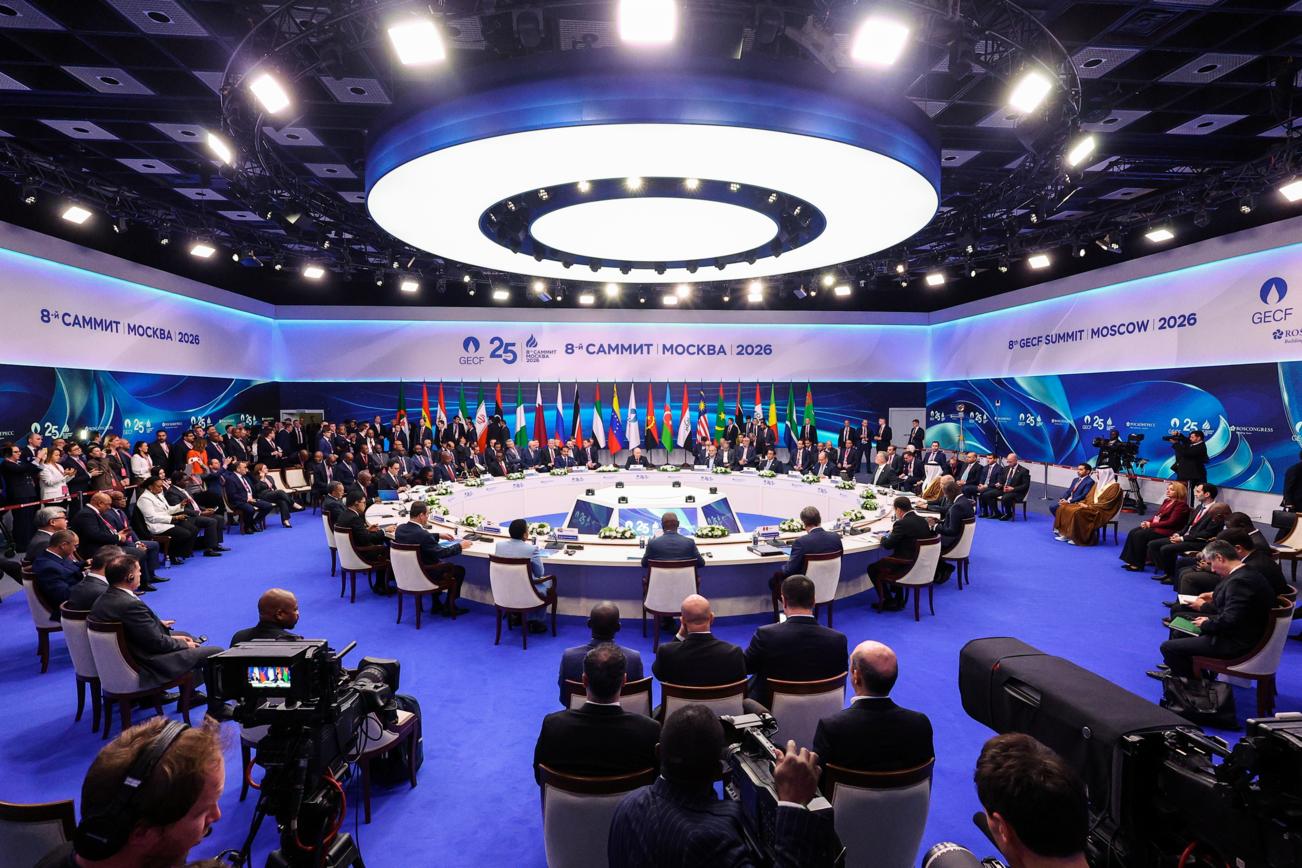
RUSSIA, MOSCOW - OCTOBER 27, 2026: A plenary session of the 8th Summit of the Gas Exporting Countries Forum (GECF) takes place at Moscow's World Trade Centre. Sergei Bulkin/TASS Россия. Москва. Пленарное заседание VIII саммита Форума стран - экспортеров газа (ФСЭГ) в Центре международной торговли. Сергей Булкин/ТАСС
MOSCOW (Shahid Ghumman): The eighth summit of the Gas Exporting Countries Forum (GECF) concluded in the Russian capital Moscow with the adoption of a joint Moscow Declaration. Russian President Vladimir Putin, Iranian President Masoud Pezeshkian, the Emir of Qatar Sheikh Tamim bin Hamad Al Thani and heads of state and high-level delegations from other countries took part in the summit. The participating countries agreed on global energy security, reliable supply of natural gas, stability in international markets, protection of energy infrastructure and expanding investment and technical cooperation in the gas industry.
At the summit held on 27 October at Moscow’s World Trade Centre, detailed discussions were held on the importance of natural gas in the global economy, growing energy needs, difficulties facing international trade and the future of cooperation among gas-producing countries. The situation in the Middle East, economic sanctions and their effects on global energy supplies also came under discussion at the summit.
Before the proceedings of the summit began, a joint photograph of the participating world leaders was taken, after which the main session began under the chairmanship of President Putin. After the opening address by the Russian President, the organisation’s Secretary-General Philip Mshelbila, the heads of delegations of member countries and representatives of observer countries addressed the summit. Various countries presented their positions on the problems facing the global gas market, growing energy demand and possibilities of future cooperation.
In his address, President Putin described natural gas as important for global economic development and energy security, stressing the problems facing the gas industry and the need for international cooperation. In his address, Iranian President Masoud Pezeshkian mentioned the effects of the sanctions imposed on Iran and military tensions in the Middle East on the global energy market, and supported expanding cooperation among gas-producing countries.
The most important outcome of the summit was the adoption of the Moscow Declaration. At the end of the summit, President Putin announced the adoption of the document already agreed among the participating countries. The declaration described natural gas as an important source of global energy security and economic development, and expressed the resolve to further strengthen consultation and cooperation among member countries.
The Moscow Declaration made it clear that every country has a permanent and sovereign right to take independent decisions regarding the exploration, production, use and export of its natural resources. The participating countries opposed unilateral economic sanctions and such trade measures as create obstacles in the global gas market, energy supplies and international investment.
Expressing special concern over the situation in the Middle East, the declaration said that the ongoing conflicts in the region were causing uncertainty in the global gas market, obstacles in energy supplies, price fluctuations and increased investment risks. The participating countries stressed the need to increase cooperation to keep energy markets safe from the effects of political tensions and to ensure the uninterrupted supply of natural gas.
The summit also gave special importance to the protection of key installations related to gas production and transmission. The Moscow Declaration supported joint measures to protect gas pipelines, production centres, liquefied natural gas installations and other infrastructure from physical attacks and cyber threats. It also highlighted the need to develop new routes for gas trade and to make the global supply chain safer and more stable.
The declaration stressed the importance of fair prices of natural gas, transparency in price determination and long-term trade agreements. The member countries supported reducing unusual fluctuations in the global gas market, providing a favourable environment for investment and maintaining a balance between the interests of gas-producing countries and consumers.
On environmental protection, the participating countries supported a fair and balanced transition towards low-carbon energy, saying that natural gas could play an important role in achieving environmental goals while meeting global energy needs. The declaration agreed on increasing cooperation to reduce carbon emissions from the gas industry, introduce modern technology and promote research and development in the energy sector.
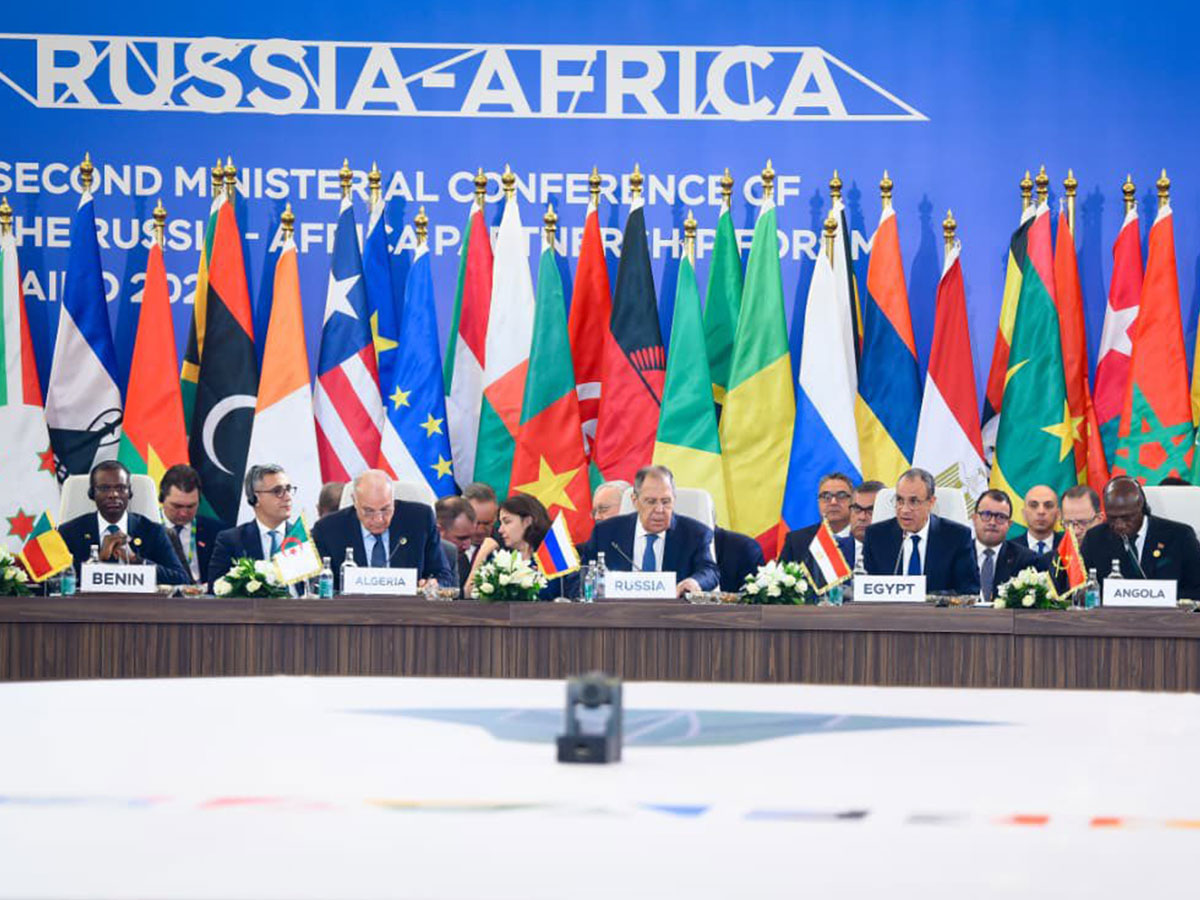
A day before the summit, on 26 October, the organisation’s ministerial meeting also discussed the future of the gas industry and new investment opportunities. On the occasion, Russian Energy Minister Sergei Tsivilev proposed the establishment of an international gas bank, aimed at providing long-term financial support for the development of gas infrastructure in Africa and other regions of the world.
According to the Russian Energy Minister, the proposed gas bank would not be limited to providing financial resources alone, but would also be able to provide technical advice, business solutions and support in the development of energy projects to various countries. Russian officials described increased cooperation in gas projects in African countries, infrastructure construction and training of local experts as important.
Iranian President Masoud Pezeshkian, the Emir of Qatar Sheikh Tamim bin Hamad Al Thani, President of Equatorial Guinea Teodoro Obiang Nguema Mbasogo, President of Mozambique Daniel Francisco Chapo and Chairman of Libya’s Presidential Council Mohamed al-Menfi took part in the Moscow summit. Algeria was represented at prime minister level, while acting President of Venezuela Delcy Rodriguez was scheduled to take part via video link and the Vice President of Venezuela had arrived in Moscow.
Representatives of the organisation’s observer countries Angola, Azerbaijan, Iraq, Malaysia, Mozambique and Senegal also took part in the summit. Turkmenistan and South Africa had been invited as special guest countries.
Bilateral meetings of President Putin with various foreign leaders were also part of the programme on the occasion of the summit. The agenda of these meetings included bilateral relations, energy trade, investment and other matters of mutual interest.
The 12 permanent member countries of the Gas Exporting Countries Forum are Russia, Iran, Qatar, Algeria, the United Arab Emirates, Egypt, Libya, Nigeria, Venezuela, Bolivia, Equatorial Guinea and Trinidad and Tobago, while eight countries have observer status.
The member countries of the organisation own around 70 percent of the world’s proven natural gas reserves, and their share in global gas production is around 38 percent. In this respect, the organisation holds an important position with regard to global energy needs, gas trade and future investment.
The Gas Exporting Countries Forum began in 2001 in the Iranian capital Tehran, while the organisation’s charter was signed in Moscow in 2008. The organisation’s permanent secretariat is based in the Qatari capital Doha. Russia had also previously hosted the organisation’s second summit in 2013.
In the declaration adopted at the end of the eighth summit in Moscow, national sovereignty over natural resources, stability in the global gas market, protection of energy infrastructure, opposition to unilateral sanctions, modern technology and international cooperation were declared the important priorities of future activities.
About The Author