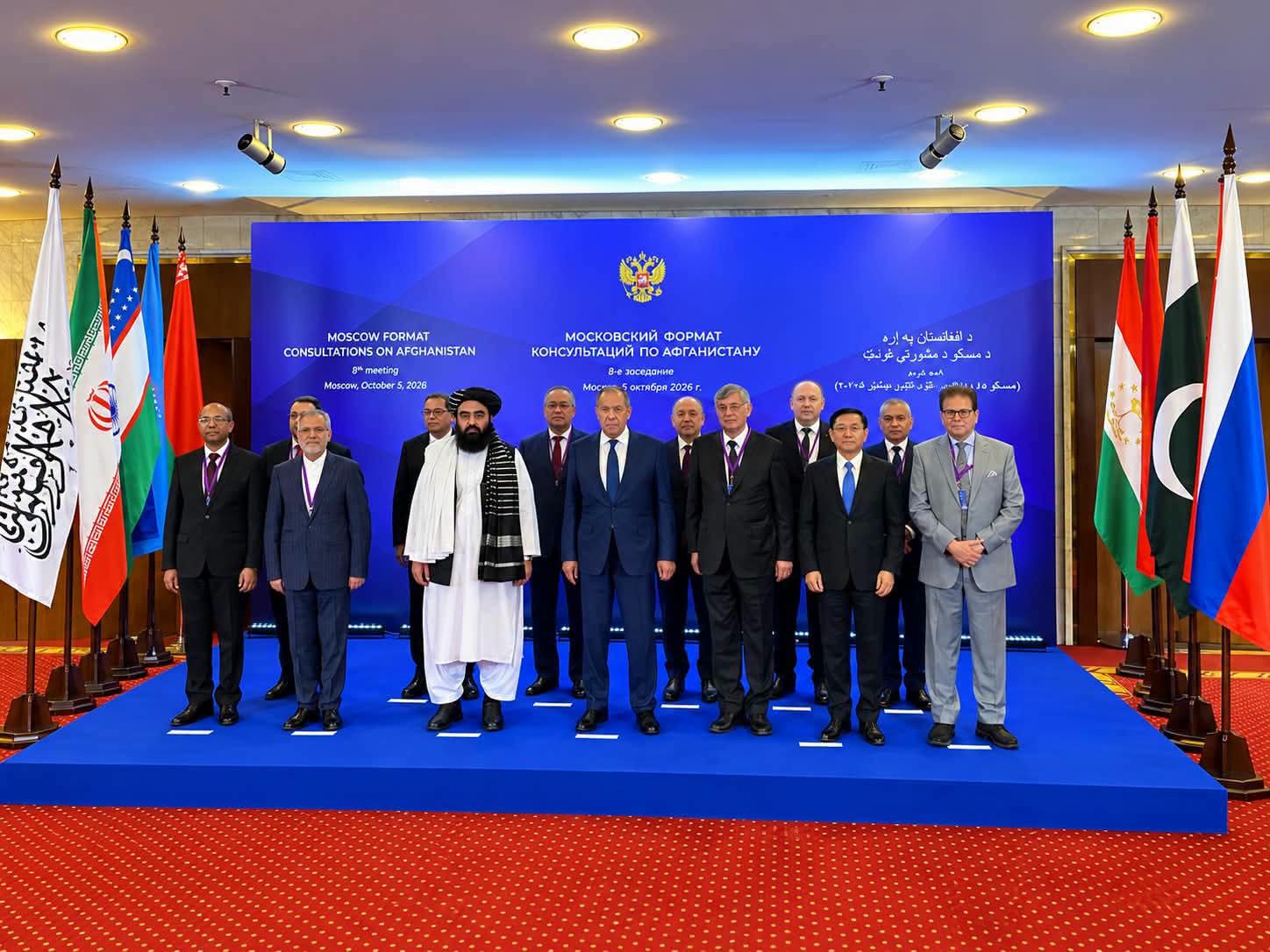
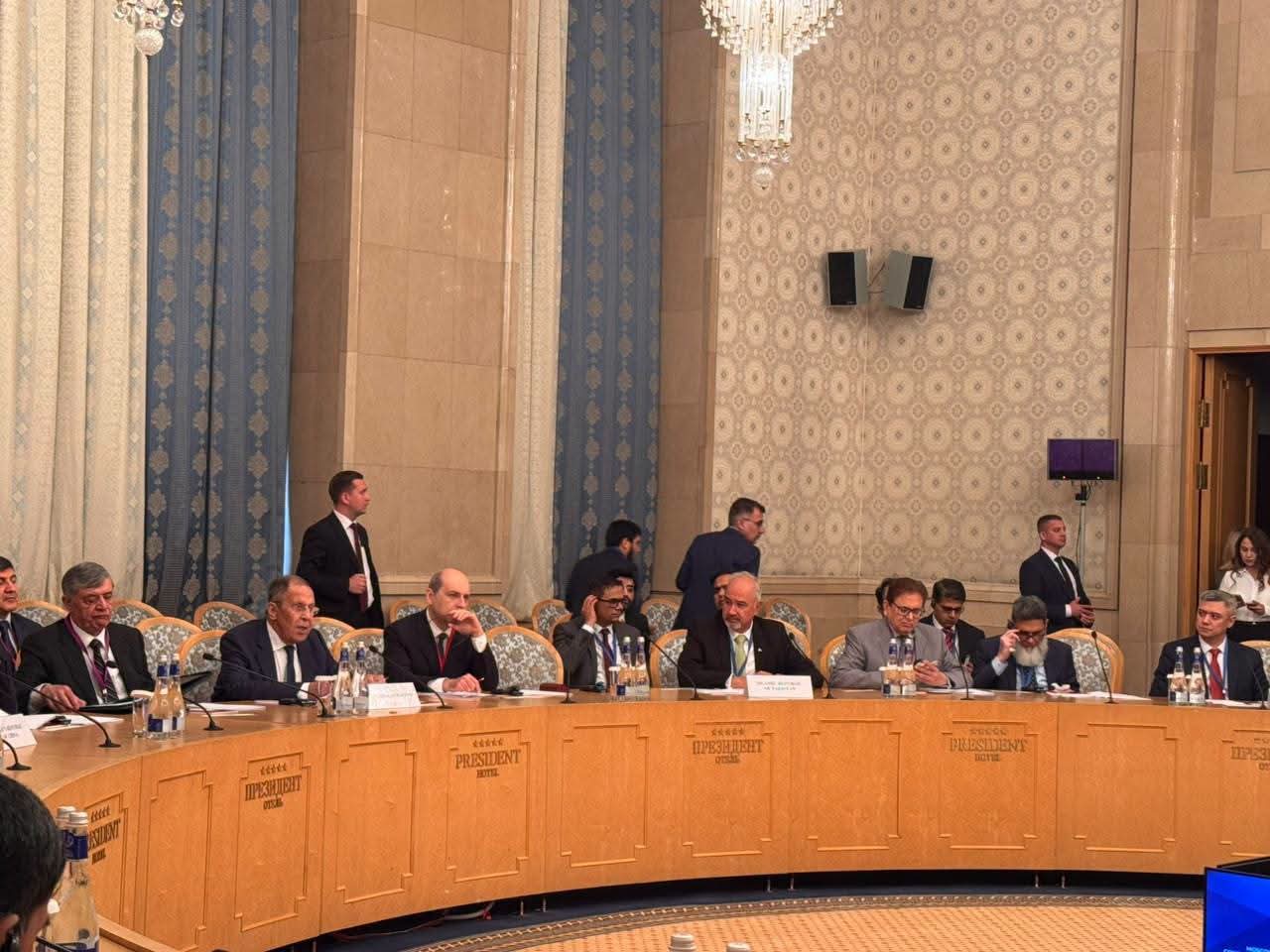
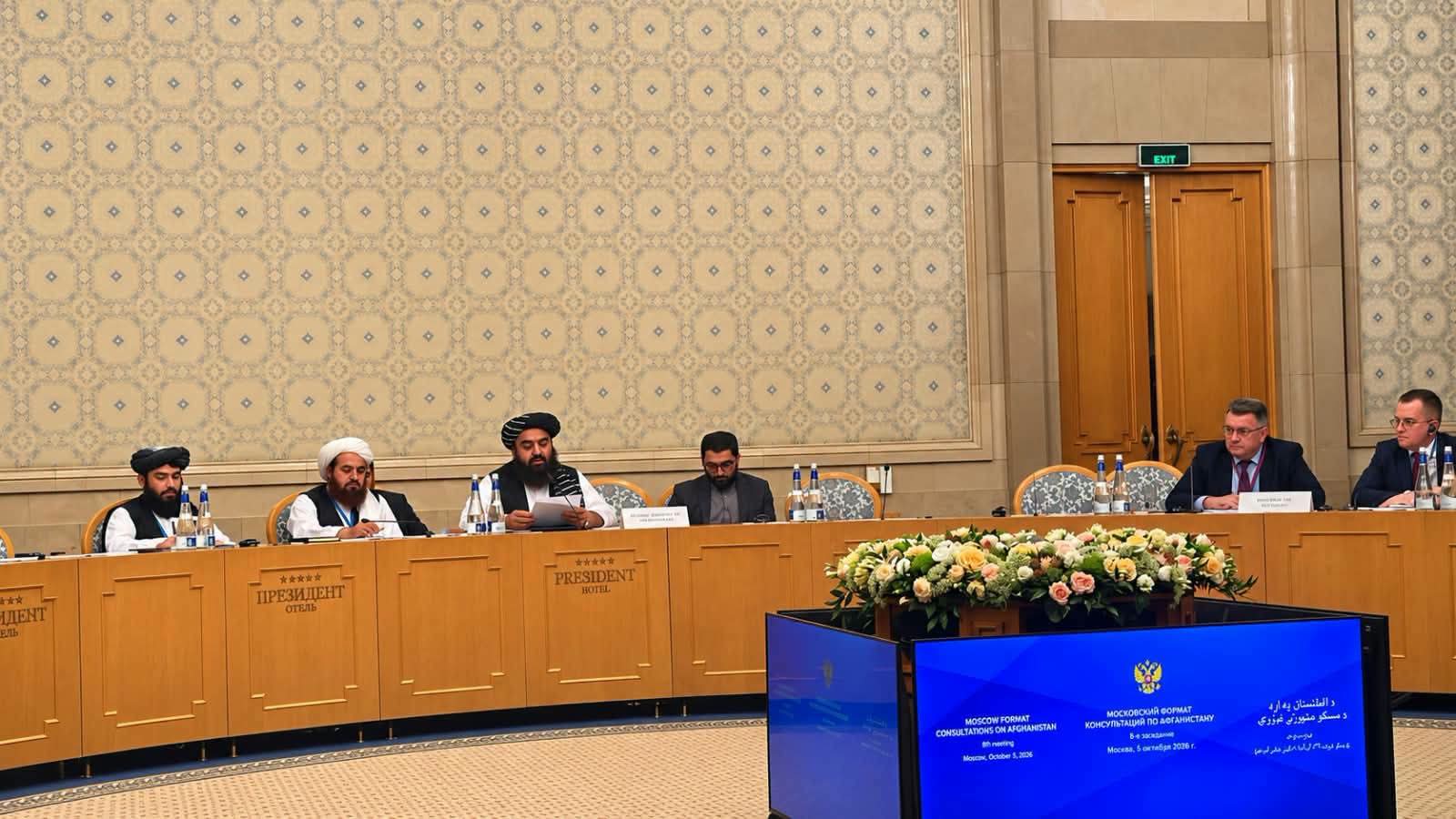
MOSCOW (Shahid Ghumman): The eighth meeting of the Moscow Format Consultations on Afghanistan was held in the Russian capital, bringing together representatives from Pakistan, Afghanistan and other regional countries to discuss peace, security, counterterrorism, economic cooperation and Afghanistan’s humanitarian situation.
Pakistan was represented by a high-level delegation led by Ambassador Mohammad Sadiq, Special Assistant to the Prime Minister and Special Representative for Afghanistan.
The Pakistani delegation also included Pakistan’s Ambassador to Russia Faisal Niaz Tirmizi, Pakistan’s Ambassador to Afghanistan Ubaid-ur-Rehman Nizamani and other senior officials.
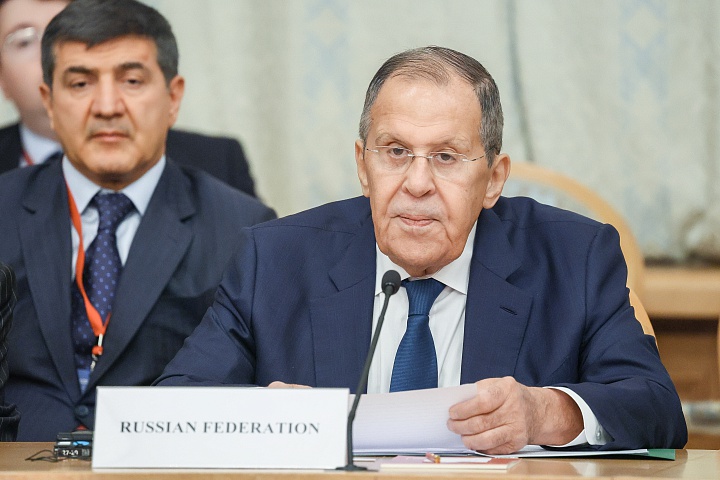
Opening the meeting, Russian Foreign Minister Sergey Lavrov said the Moscow Format had been operating since 2016 and brought together countries interested in an equal and mutually beneficial partnership with the Afghan people.
He said the platform provided an opportunity to hold direct and collective discussions with Afghan representatives on the situation in the country and matters related to international assistance for Kabul.
Afghan Government Successfully Managing the Country: Lavrov
Sergey Lavrov noted that August 2026 marked five years since the withdrawal of Western forces from Afghanistan.
According to him, the Taliban-led Afghan government had established control over most of the country and was managing it with considerable success.
The Russian foreign minister said Afghan security forces were conducting operations against Daesh and other terrorist organisations. Hundreds of militants had been eliminated, while several major terrorist attacks against foreign nationals and diplomatic missions had been prevented.
He said it was in the common interest of regional countries to strengthen Kabul’s counterterrorism capabilities. Afghanistan should be provided with technical equipment and expert assistance, while contacts between intelligence and security agencies should also be maintained.
Opium Production in Afghanistan Falls by 90%
Lavrov praised the Afghan government’s measures to curb the illegal narcotics trade.
Citing assessments by the United Nations Office on Drugs and Crime, he said opium production in Afghanistan had declined by 90% since 2022.
Afghan Economy and Regional Projects
According to the Russian foreign minister, the Afghan economy continued to develop despite Western sanctions and the freezing of Afghanistan’s national financial assets.
He said the Afghan government had reaffirmed its commitment to regional energy projects, including the Turkmenistan-Afghanistan-Pakistan-India gas pipeline, commonly known as TAPI.
Lavrov said Afghanistan had implemented tax reforms, strengthened anti-corruption legislation and revived industrial activity.
According to official figures, approximately 170 new production facilities had opened in Afghanistan, while a five-year development plan for the electricity sector had also been prepared.
The Russian foreign minister said Afghanistan was trading with more than 100 countries and that its foreign trade had risen to $14 billion in 2025.
22 Million Afghans in Need of Humanitarian Assistance
Lavrov described Afghanistan’s humanitarian situation as difficult.
According to UN estimates, more than 17 million Afghans, nearly half the country’s population, could face food shortages during the coming winter.
He said the total number of people requiring humanitarian assistance in Afghanistan could reach 22 million.
The Russian foreign minister urged international organisations and individual countries to take collective and bilateral measures to improve the humanitarian situation.
He said Russia would continue providing regular humanitarian assistance to Afghanistan, with another consignment expected to arrive in the coming months.
Russia Opposes NATO Bases in Afghanistan and Neighbouring Countries
Lavrov strongly opposed the deployment of NATO military infrastructure in Afghanistan or neighbouring countries under any pretext.
He said historical experience showed that foreign military bases and deployments led to greater instability and conflict.
The Russian foreign minister expressed hope that the Moscow Format meeting would contribute to Afghanistan’s development as an independent and stable state and help promote peace and harmony throughout the region.
Pakistan, meanwhile, reaffirmed the importance of a peaceful and stable Afghanistan, stressing that sustained and meaningful dialogue among regional countries was essential for addressing shared security and economic challenges.
About The Author