Moscow (Shahid Ghumman): Pakistan’s Ambassador to Russia, Faisal Niaz Tirmizi, has said that Pakistan played an important role in de-escalating tensions between Iran and the United States and helping avert a potential war, which could have led to a major regional conflict and endangered millions of expatriate workers in Gulf countries.
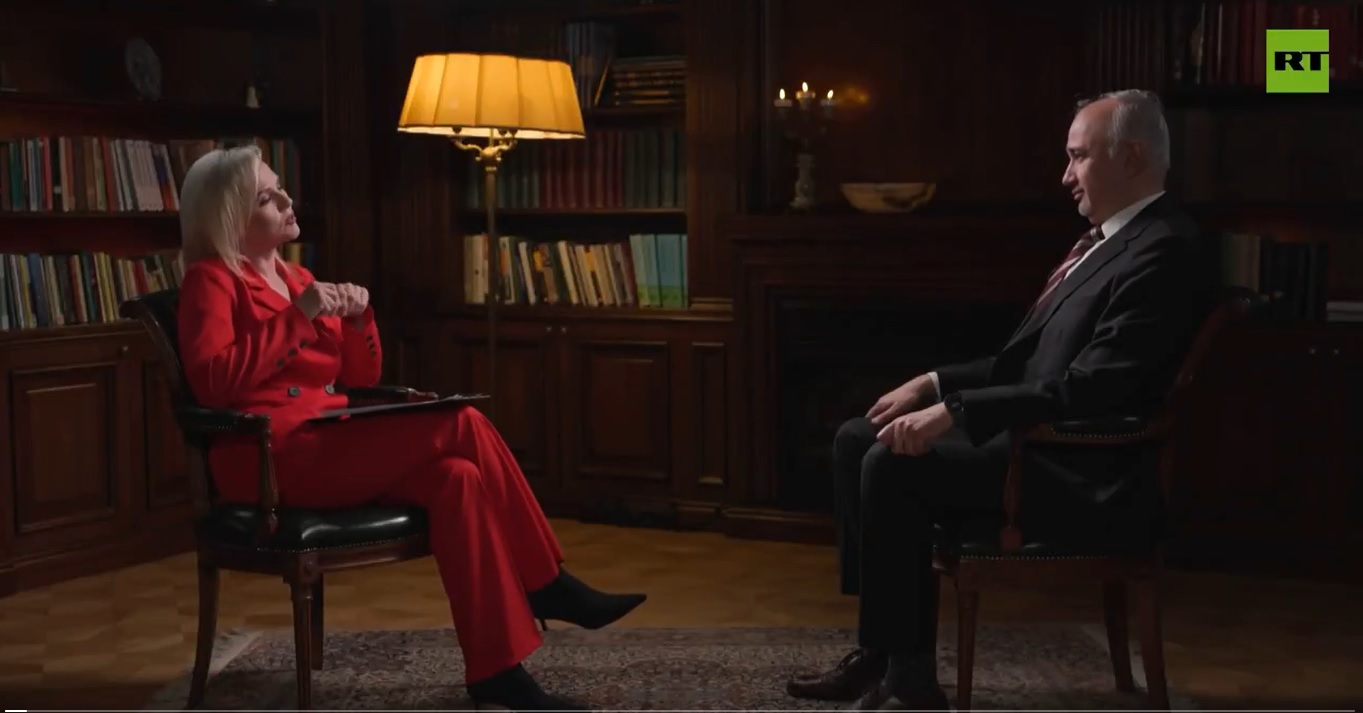
In an exclusive interview with Russian state broadcaster RT, Ambassador Tirmizi elaborated on Pakistan’s foreign policy, regional situation, and international relations.
He said that Pakistan’s leadership, including Field Marshal Asim Munir, Prime Minister Shahbaz Sharif, and Deputy Prime Minister Ishaq Dar, played a key role in maintaining communication channels between Tehran and Washington and facilitating dialogue. He added that Pakistan continues its efforts to sustain the ceasefire and promote lasting peace in the region.
The ambassador warned that tensions had reached a critical level, with serious risks of large-scale destruction. He said Iran is a civilization with a deep historical legacy, and any escalation could have had devastating consequences, which is why Pakistan made intensive diplomatic efforts to prevent further deterioration.
Highlighting the humanitarian dimension, he pointed out that around 6 million Pakistanis, 10 million Indians, 5 million Bangladeshis, and 3 million Nepalis are working in Gulf countries, and any conflict would have directly threatened their livelihoods and safety.
He noted that these workers are abroad to support their families, and any escalation could have triggered a major humanitarian crisis.
Ambassador Tirmizi stressed that Pakistan’s foreign policy is balanced and independent. He said Pakistan seeks positive and constructive relations with all major powers, including Russia, China, and Western countries, and does not align with bloc politics, instead focusing on mutual respect and shared interests.
He also highlighted growing Pakistan–Russia relations, saying there is significant potential for cooperation in trade, energy, and defense sectors, especially in the context of ongoing global energy challenges.
On regional issues, he described the situation in Afghanistan as crucial for regional peace and said the international community must play a constructive role in ensuring stability.
Referring to global implications, he said nearly 22 percent of global oil supply passes through Gulf routes, and any conflict in the region would have severely impacted the global economy. He also expressed concern over reported incidents near Iran’s Bushehr Nuclear Power Plant, warning that targeting nuclear facilities could have catastrophic consequences for the entire region.
He further said Pakistan has been recognized by both Iran and the United States as a neutral and credible intermediary, reflecting its balanced diplomatic approach. He noted that direct engagement between the two sides after 47 years marks a significant diplomatic achievement.
Reiterating Pakistan’s principled stance, he said Islamabad continues to support the right of self-determination for Palestine and Kashmir.
In conclusion, Ambassador Tirmizi said that no matter how tense the situation becomes, diplomacy and dialogue remain the only viable path forward, and Pakistan will continue to play its role in promoting peace in the region.
About The Author