During its chairmanship, Pakistan can play an important role in resolving regional disputes, a joint strategy on Afghanistan and promoting trade and communication corridors, Russian and Pakistani experts say
ISLAMABAD (Voice of Russia): Pakistani, Russian and Central Asian experts have presented important proposals on the prospects for promoting regional connectivity, security and shared prosperity during Pakistan’s 2026-2027 chairmanship of the Shanghai Cooperation Organisation (SCO).
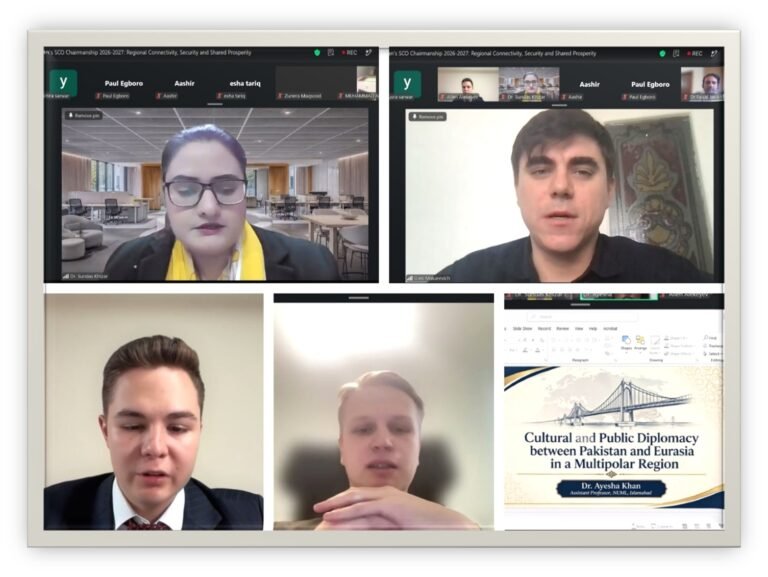
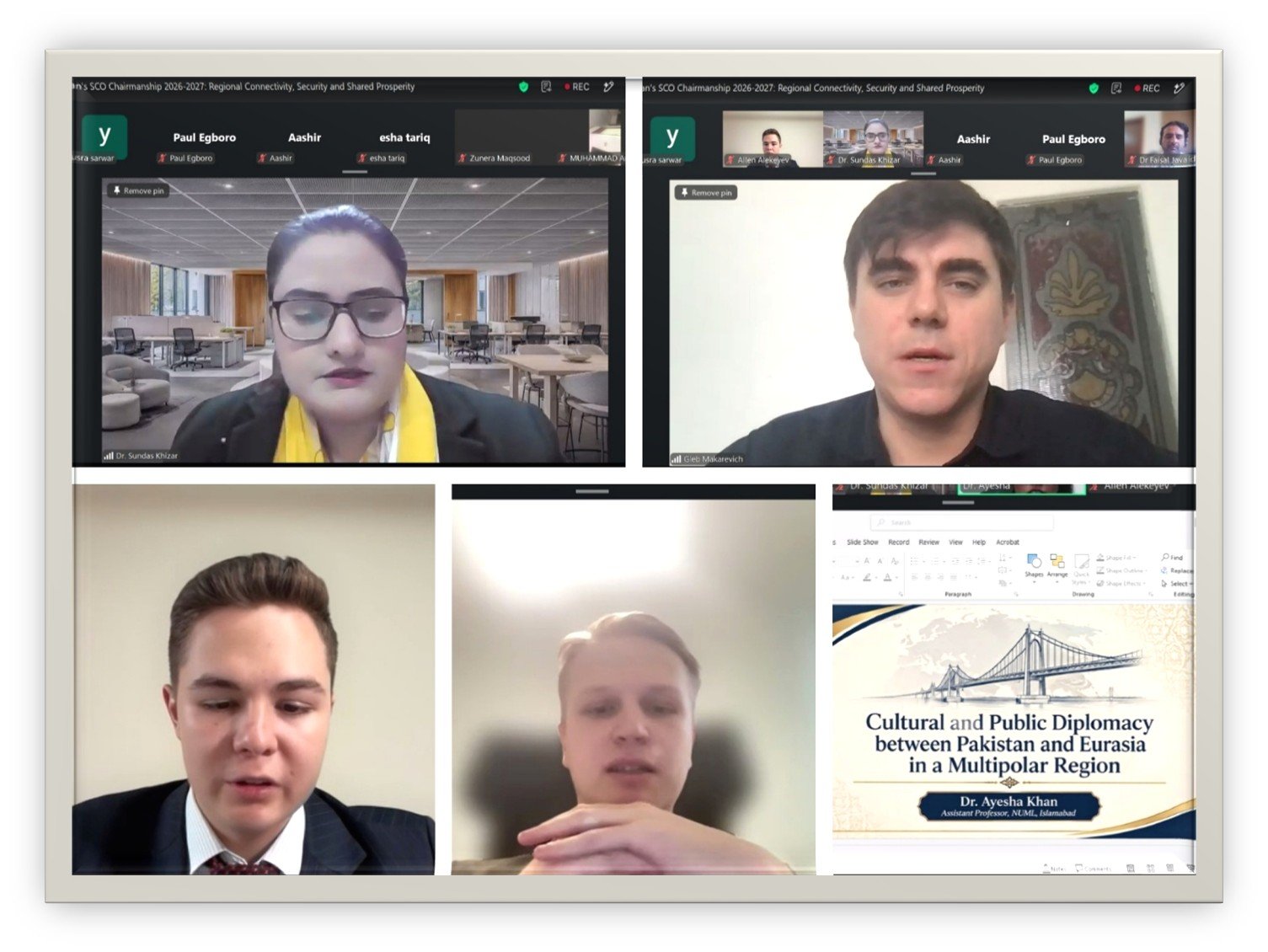
The Consortium for Asia Pacific and Eurasian Studies (CAPES), in collaboration with the University of Okara, organised an international webinar on 26 November, attended by prominent experts and scholars from the Eurasian region. The webinar was moderated by Dr Sundas Khizar.
Allen Alekseyev, Deputy Chief Research Officer at the Kazakhstan-based research institute Nightingale International, said maritime transport would retain its dominance in world trade, but land trade corridors become extremely important if sea routes are disrupted.
He said the Shanghai Cooperation Organisation should focus on making land trade corridors so reliable that they can be used even in times of crisis. He described the decision to establish the SCO Zone and the SCO Development Bank in Qingdao, China, as an important development in this regard.
Gleb Makarevich, Research Fellow at the Primakov Institute of World Economy and International Relations (IMEMO RAS) of the Russian Academy of Sciences, stressed the need for a comprehensive and indivisible regional security system.
He said Pakistan could initiate negotiations on this during its chairmanship of the Shanghai Cooperation Organisation and use the organisation’s platform to resolve differences with its neighbouring countries.
Dr Ayesha Khan, Assistant Professor at the National University of Modern Languages (NUML), said economic corridors connect markets, while cultural and public diplomacy bring societies closer to each other. In the current multipolar world, Pakistan needs to focus on both areas, she said.
She highlighted the region’s shared historical, academic and cultural heritage with reference to Zahiruddin Babur, Al-Farabi, Maulana Rumi, Amir Khusro and Allama Muhammad Iqbal.
Terming Russia’s role in Oriental studies and research indispensable, Dr Ayesha Khan said limited public awareness, language differences, geopolitical competition, the visa regime, high air travel costs and the lack of continuity in cultural activities are major obstacles to promoting regional connectivity.
Artur Mukhlyuk, Junior Research Fellow at the Primakov Institute of the Russian Academy of Sciences, said Afghanistan has for decades been the focus of both divergence and convergence of Russian and Pakistani interests.
He said Russia considers Afghanistan part of Central Asia rather than South Asia. Moscow is concerned about the threats of terrorism, illegal smuggling and instability in the former Soviet region emanating from Afghanistan towards the north, he said.
The Russian expert said Moscow supports the position that regional issues should be resolved by the countries of the region themselves, rather than by outside powers.
About The Author